Bestes lokales KI-Coding-Modell für 16 GB RAM
Wähle eine Größe, die Speicher für Editor, Repository, Kontext und Agent-Tools lässt.

In diesem Leitfaden
- Kurzantwort: Beginne mit einem 7B-Coder
- 16 GB RAM sind nicht 16 GB VRAM
- Ein realistisches Speicherbudget planen
- Welche Modellklasse passt zu 16 GB?
- Praktische Modelle und Einsatzfälle
- Warum großer Kontext die Konfiguration kippt
- Modelle mit derselben Aufgabe testen
- Häufige Fehler auf 16-GB-Rechnern
- FAQ
Auf einem 16-GB-Rechner ist die Wahl des besten lokalen Coding-Modells vor allem Speicherplanung. Modell, Cache, Betriebssystem, Editor, Repository-Suche und Tools konkurrieren um dieselben Ressourcen.
Kurzantwort: Beginne mit einem 7B-Coder
Ein 7B-Coder in Q4 ist der sicherste Start und lässt Platz für Ollama, Editor, Git und Kontext. 14B ist eine knappe Testoption.
Default recommendation
Ein 7B-Coder in Q4 ist der sicherste Start und lässt Platz für Ollama, Editor, Git und Kontext. 14B ist eine knappe Testoption.
16 GB RAM sind nicht 16 GB VRAM
System-RAM wird von allen Programmen geteilt; dedizierter VRAM hält hauptsächlich das Modell. Integrierte Grafik nutzt ebenfalls RAM.
Ein realistisches Speicherbudget planen
Die Modelldatei ist nicht der Gesamtverbrauch. Puffer, KV-Cache, Kontext, Index, Terminals und Container kommen hinzu.
Welche Modellklasse passt zu 16 GB?
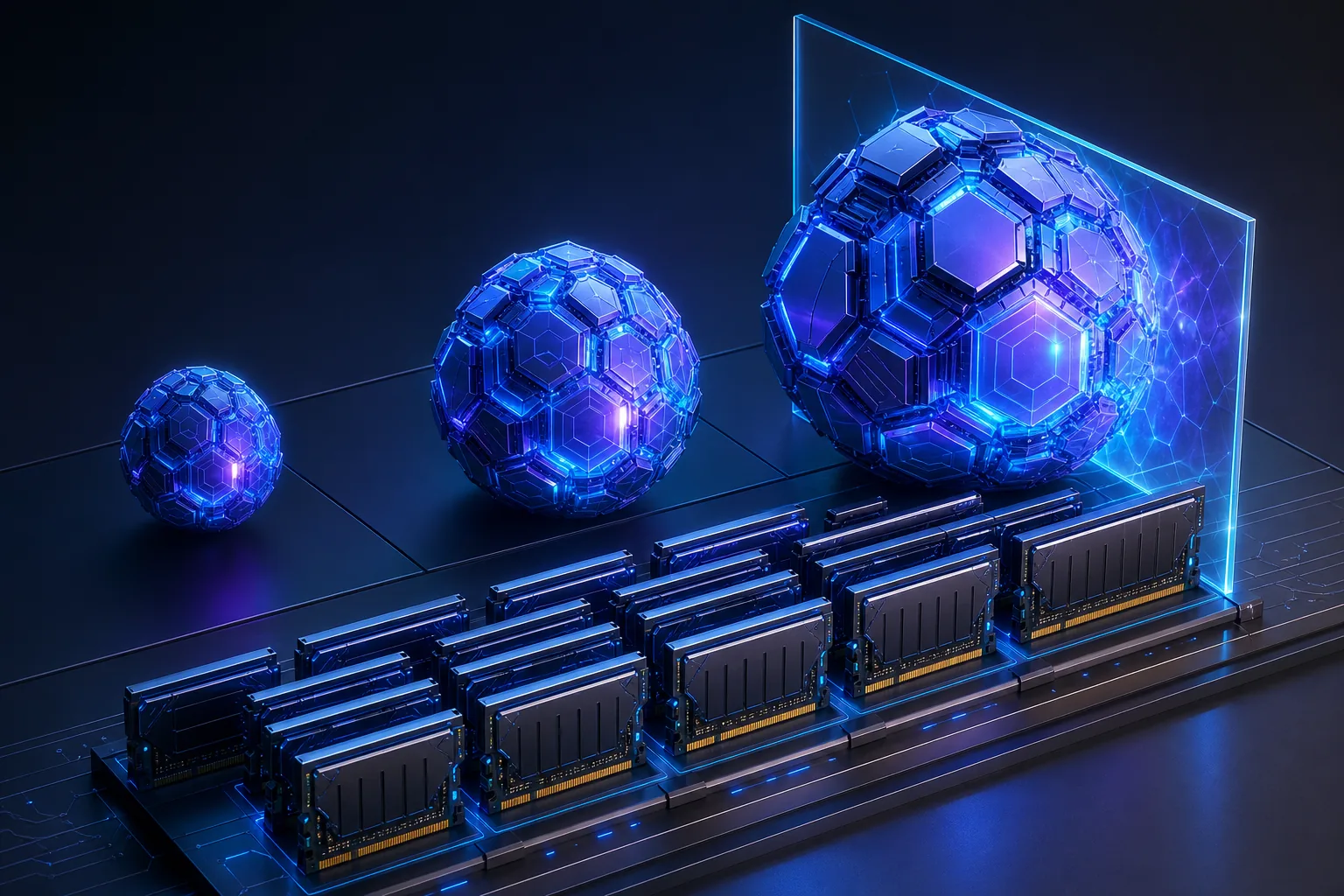
1,5B–3B bietet geringe Latenz, 7B Balance, 14B nur kurze Kontexte und über 20B liegt außerhalb des normalen 16-GB-Ziels.
| Model class | Typical role | Practical verdict |
|---|---|---|
| 1.5B–3B Q4 | Autocomplete and quick explanations | Fast but weaker for repository reasoning |
| 6B–8B Q4 | Daily patches, tests, refactors | Best balance for most 16GB computers |
| 12B–14B Q4 | Harder reasoning with short context | Possible but tight |
| 20B+ quantized | Large-model experiments | Usually impractical with editor and tools |
Praktische Modelle und Einsatzfälle
Qwen2.5-Coder 7B ist ein guter Ausgangspunkt. Vergleiche CodeGemma 7B und DeepSeek-Coder 6.7B mit echten Aufgaben.
Warum großer Kontext die Konfiguration kippt
Großer Kontext vergrößert Cache und Zeit. Fünf relevante Dateien sind oft besser als das gesamte Repository.
Modelle mit derselben Aufgabe testen
Teste Modulverständnis, kleinen Patch, Testergänzung und Diff-Prüfung unter gleichen Bedingungen.
-
Explain a module
Check responsibilities, dependencies, and hallucinated files.
-
Make one bounded patch
Use an explicit file allowlist and review the diff.
-
Add a test
Measure project-style and edge-case understanding.
-
Record resources
Watch peak memory, swap, prompt time, token speed, and editor responsiveness.
Häufige Fehler auf 16-GB-Rechnern
Teste nicht nur mit leerem Editor und gib nicht sofort volle Shell-Rechte. Beginne schreibgeschützt.
16GB local coding model FAQ
Quellen und Modellseiten
- Ollama Qwen2.5-Coder library - Model sizes and local variants.
- Ollama CodeGemma library - Alternative coding model family.
- Ollama DeepSeek-Coder library - Alternative coding model sizes.
- Qwen2.5-Coder technical report - First-party coding model context.
Verwandte Leitfäden
- Local AI coding agent workflow - Plan repository context, permissions, patches, tests, and review gates.
- Cursor and Ollama coding agent - Connect a local model to an editor without blurring permissions.
- Odysseus AI Ollama setup - Prepare and troubleshoot the local model endpoint.
- Local AI agent dashboard comparison - Choose the workspace layer around the runtime.
- Odysseus AI Systemanforderungen - RAM, VRAM, CPU und Speicher für App und lokales Modell getrennt planen.
Last updated: July 13, 2026
Zurück zum Odysseus AI Wiki